Welcome to
Saint Maron Church
For more than one hundred years, Saint Maron’s has been serving the Maronites of the greater Cleveland area preaching the Gospel, educating our young people, celebrating the Eucharist, forming friendships in community, serving the poor and the needy, comforting the sorrowing, and attempting to make the love and grace of our God more visible in our world.
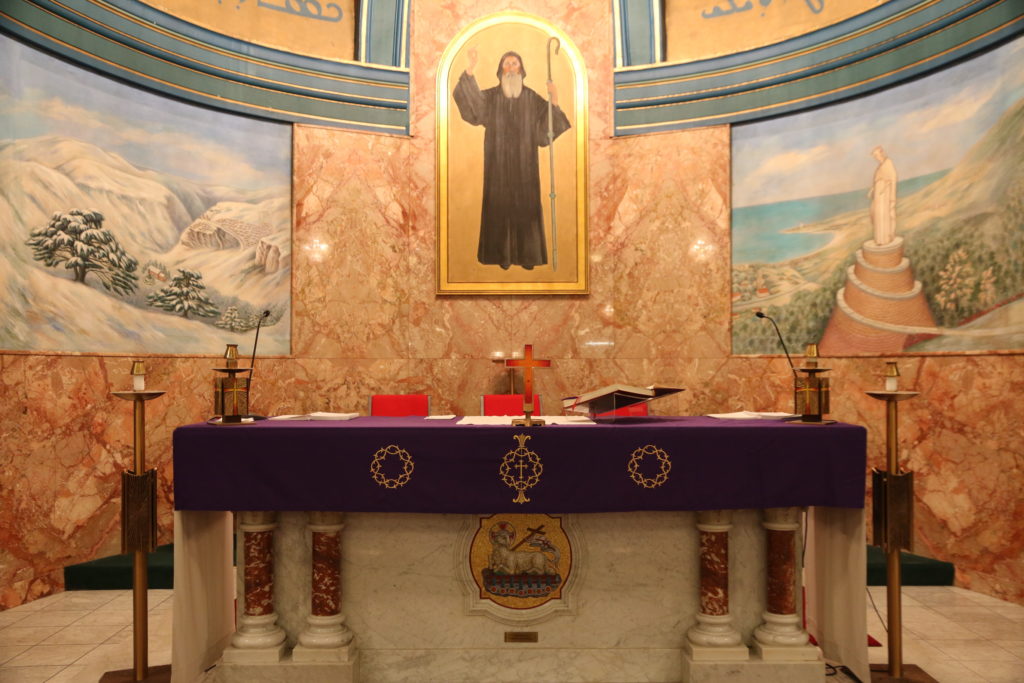
New Website
Welcome to the new website!
It is a work in progress but we hope you like the new look!
OUR ORGANIZATIONS
Serving Our Local Community
More detailed information about our many organizations coming soon!!
Recent News
2024 Festival – Save the Date
Our Annual Saint Maron Festival is only four months away! 2024 Festival Dates: AUGUST 17 & 18
Appreciation Luncheon – Save the Date
Please mark your calendars for Sunday June 16th at 1pm. We are having an Appreciation Luncheon for Fr. Elias before he leaves in…
The Wonders of Christmas Day
Christmas has come around once more. It is a season of great rejoicing for it commemorates the birth of Jesus Christ. However, if…
Current Clergy
| Pastor | Father Elias Yazbeck |
| Sub-deacons | Mr. Ghazi Faddoul Mr. Mario Ghosn Mr. Lattouf Lattouf Mr. Yamen Saada |
Download the Latest Bulletin
 SaintMaronCLE_2024-04-21.pdf (1.2 MiB)
Follow Us on Facebook
THIS YEAR
Save the Date for Something Great
We are having an Appreciation Luncheon for Fr. Elias
before he leaves in early July for his next assignment.
Our annual festival is only months away!
16
June – 2024
Appreciation Luncheon
17-18
Aug – 2024

Saint Maron Food Festival
Mon — FRI / 9am – 3pm